English+
| Strona: | Akademicka Platforma Edukacyjna |
| Kurs: | Akademicka Platforma Edukacyjna |
| Książka: | English+ |
| Wydrukowane przez użytkownika: | |
| Data: | niedziela, 4 października 2026, 16:42 |
Opis

Zakładka z materiałami z języka angielskiego dla studentów, słuchaczy i wykładowców Akademii Wymiaru Sprawiedliwości
Spis treści
- 1. Rozmowa wstępna w języku angielskim
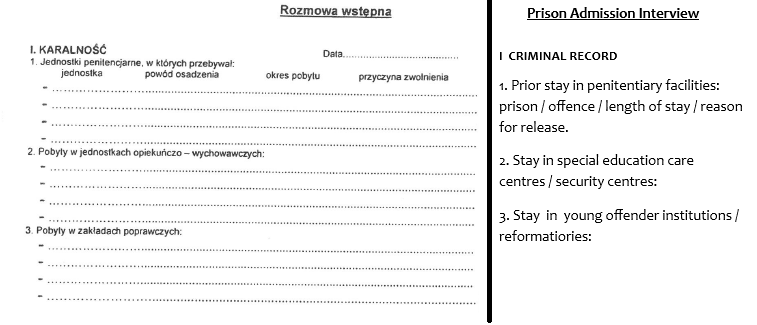
- 1.1. Introduction and Personal Data and Criminal Record
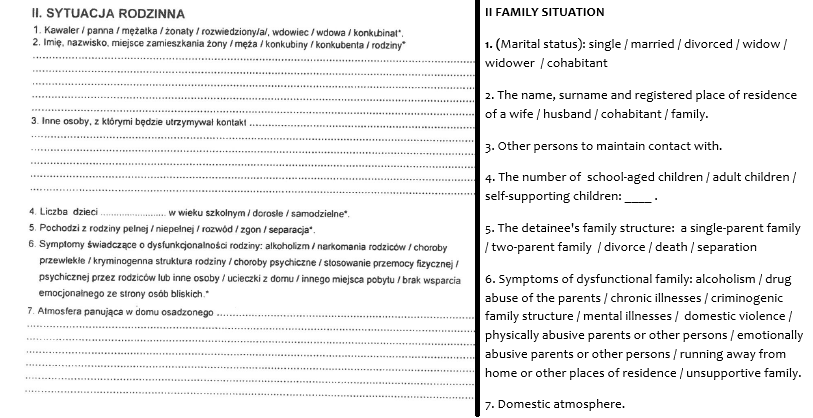
- 1.2. Family Situation
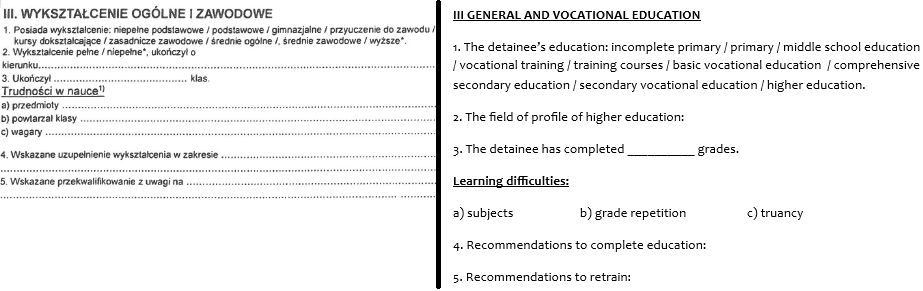
- 1.3. General and Vocational Education
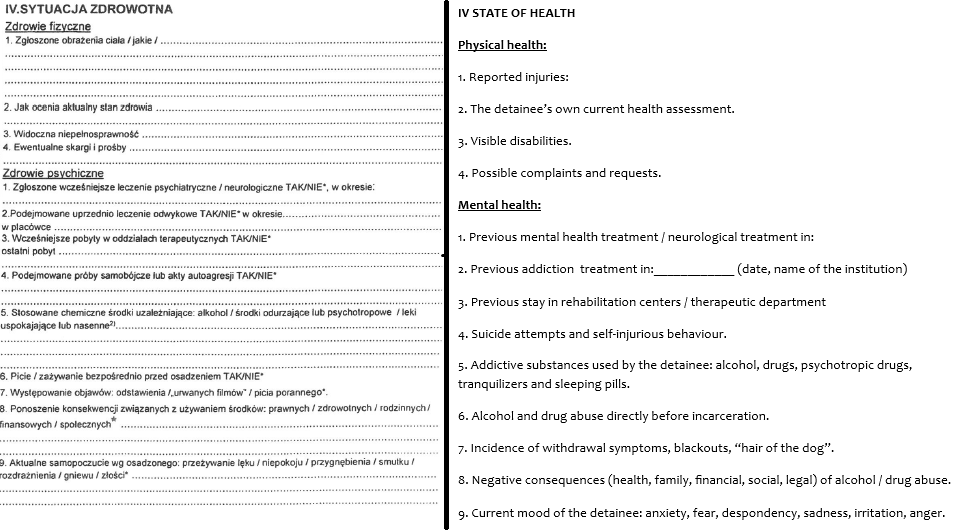
- 1.4. Health Status
- 1.5. Social Readaptation Needs Assessment
- 1.6. Problems with the Detainee's Placement
- 1.7. Attitude to Prison Subculture
- 1.8. Preliminary Needs & Problems Assessment
- 1.9. The Detainee's Aptitudes and Interests
- 1.10. The Detainee's Attitude Towards the Offence
- 1.11. Zadania - Listening Comprehension Activities
- 2. Inmate as a Co-Teacher of Foreign Languages in Prison (Q&A Session)
- 2.1. Introduction
- 2.2. The Outlines of the Project
- 2.3. The Number of Project's Participants (Inmates and Teachers)
- 2.4. The Languages Taught in Prison
- 2.5. The Duration of the Course
- 2.6. The Outcomes and the Beneficiaries of the Project
- 2.7. The Inmates' Willingness to Cooperate with the Institution
- 2.8. The Relational Sphere of the Project
- 2.9. Feedback on the Project Participants' Skills and Development
- 3. Prison: The Insitution and Community. English Vocabulary Practice
1. Rozmowa wstępna w języku angielskim
Rozmowa wstępna w języku angielskim

1.1. Introduction and Personal Data and Criminal Record


1.2. Family Situation


1.3. General and Vocational Education


1.4. Health Status


1.5. Social Readaptation Needs Assessment


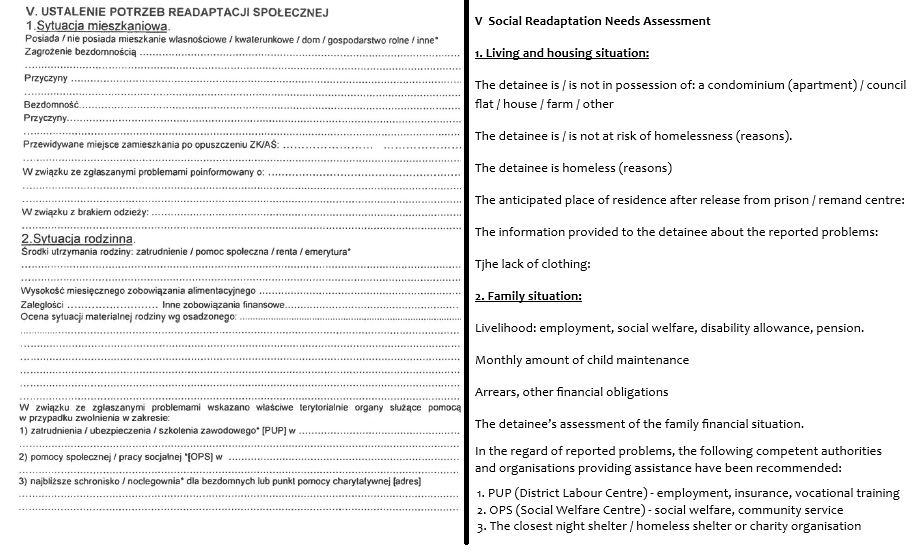
1.6. Problems with the Detainee's Placement


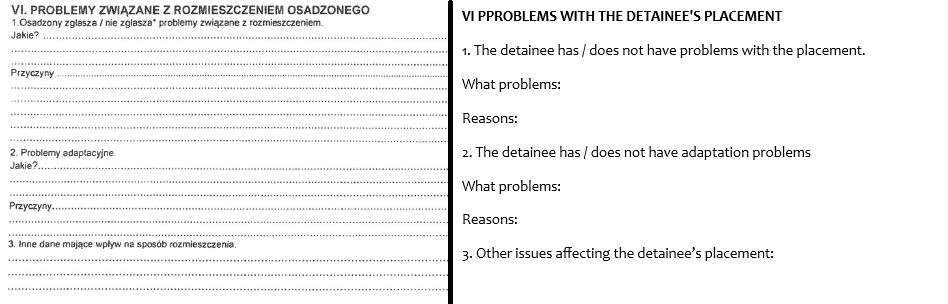
1.7. Attitude to Prison Subculture



1.8. Preliminary Needs & Problems Assessment



1.9. The Detainee's Aptitudes and Interests



1.10. The Detainee's Attitude Towards the Offence



1.11. Zadania - Listening Comprehension Activities

LISTENING COMPREHENSION ACTIVITIES
Task 1.
Listen to the conversation. Write down the questions you hear.
Task 2.
Read the questions you have written down. What other things could you ask about in this section of the interview? Write down your options.
Task 3.
Work in pairs. Role-play a conversation between a detainee and a Prison Service officer (a prison educator). Ask your questions to the partner, then swap roles.
Task 4.
Listen to the conversation again. Are there any mistakes in the utterances you hear? If so, write them down and correct them. Do the mistakes impede communication? Why / Why not?
Task 5.
Work in pairs or in small groups. Discuss what makes communication with a foreign national challenging and what makes it successful. Share your opinion with the whole class.
2. Inmate as a Co-Teacher of Foreign Languages in Prison (Q&A Session)
Inmate as a Co-Teacher of Foreign Languages in Prison (Q&A Session)

Q&A Session:
Rozmowa z prof. Valentiną Paleari (Uniwersytet w Mediolanie)
Prowadzenie oraz opracowanie merytoryczne:
dr Agnieszka Szczepaniak-Olejniczak (Akademia Wymiaru Sprawiedliwości)
2.1. Introduction
Listen to Part 1 and answer the questions.
A. Who is prof. Paleari?
B. What is the name of the project?
C. How do you evaluate the potential for conducting this type of project in a prison setting?
2.2. The Outlines of the Project
Listen to Part 2 and answer the questions.
A. What is the timeframe of the project?
B. What are the participant groups involved in this project?
C. What are the characteristic features of each participant group?
2.3. The Number of Project's Participants (Inmates and Teachers)
Listen to Part 3 and answer the questions.
A. What has been the number of inmate co-teachers participating in the project in each consecutive year?
B. How many students have participated in the project within the specified timeframe?
C. How have the participation figures evolved throughout the duration of the project?
2.4. The Languages Taught in Prison
Listen to Part 4 and answer the questions.
A. What was the first language course offered in prison?
B. What was the organisers' idea upon introducing the first language course for inmates?
C. What language courses could be offered in the correctional facility?
D. What unusual but important language course has been offered in the penal institution? Why?
2.5. The Duration of the Course
Listen to Part 5 and answer the questions.
A. What is the minimum duration of the course?
B. How many class hours are there per week?
C. Do you think the duration of such a course is sufficient?
2.6. The Outcomes and the Beneficiaries of the Project
Listen to Part 6 and answer the questions.
A. What are the outcomes of the project?
B. How did the inmate co-teachers benefit from their participation in the course?
C. In what way did the inmate students benefit from the course?
D. What benefits for the master's degree students could be highlighted?
E. How does the inmates' participation in the course relate to their level of motivation?
F. Who benefits most from participating in the project, in your opinion?
2.7. The Inmates' Willingness to Cooperate with the Institution
Listen to Part 7 and answer the questions.
A. What is the inmates' view on the language courses?
B. How does participation in the course affect the inmates' perception of the penal institution?
C. Are the incarcerated project participants willing to cooperate with people from the outside?
D. Do you think it is possible to obtain such results in the Polish prison setting?
2.8. The Relational Sphere of the Project
Listen to Part 8 and answer the questions.
A. What is unusual about the cooperation of an inmate co-teacher in the project?
B. What influence does an inmate co-teacher have on the class?
C. What are the peer education principles observed in the language classes in prison?
D. How does forming a relationship between a teacher and students influence the process of foreign language learning?
2.9. Feedback on the Project Participants' Skills and Development
Listen to Part 9 and answer the questions.
A. What is the educational profile of the incarcerated participants?
B. What benefits provided for in the Italian Penal Code can be applied to some of the inmate pariticipants?
C. How might course participation affect an inmate's educational career?
D. What are your observations on the project participants’ development and acquired skills?
3. Prison: The Insitution and Community. English Vocabulary Practice
Prison: The Insitution and Community. English Vocabulary Practice

(kliknij ikonkę, aby przejść do publikacji)
Podręcznik opublikowany w ramach projektu pn. „Pilotażowe kompleksy penitencjarne”, który realizowany jest z Programu Operacyjnego pn. „Sprawiedliwość” oraz finansowany ze środków funduszy norweskich i środków krajowych.